Plan. Certificates. Evidence. One pack.
Everything a licence application asks for — the measured floorplan, the fire-safety annotations, the room schedule, the certificate record — drawn and dated in one place, exported as a single PDF.
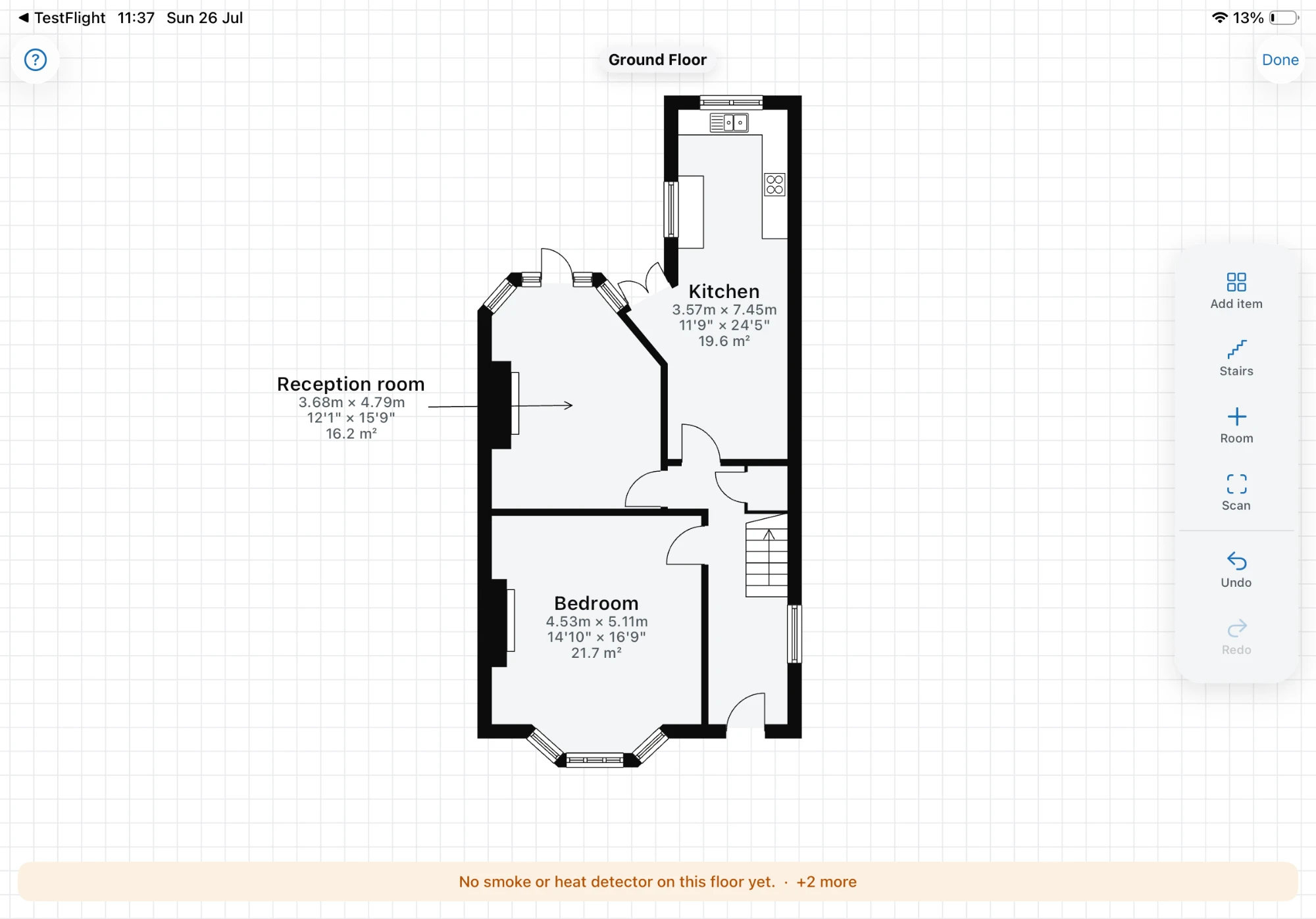
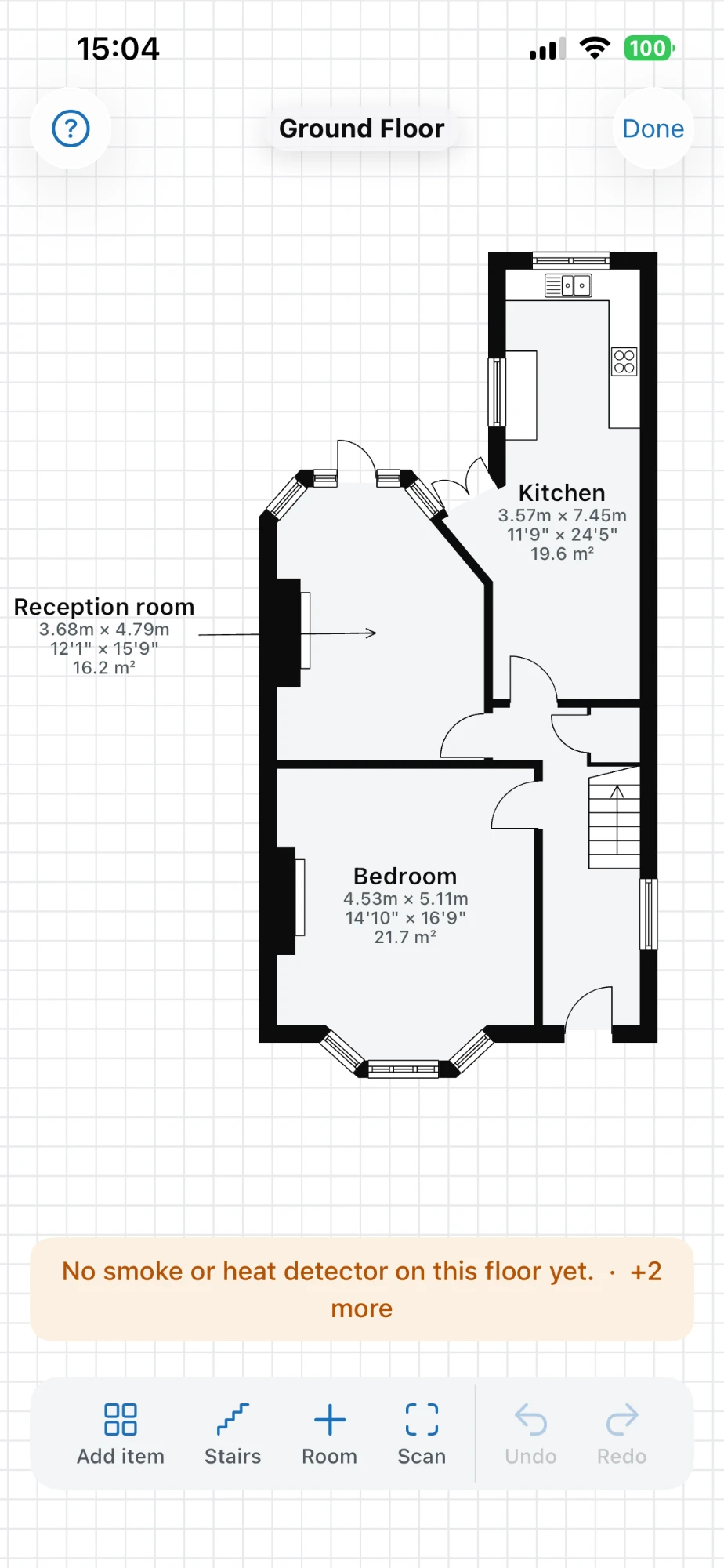
From tape measure to PDF in three steps.
Scan each room with LiDAR on a Pro iPhone or iPad — or draw it by hand; rooms snap to a 5 cm grid. The scan gives the layout, your tape measure gives the numbers: Lintel never invents a measurement.
Record all seven certificate types with their dates. Stamp detectors, alarms, fire doors and escape routes straight onto the plan. The checklist tracks what your council's template requires.
One tap renders floorplans with annotations, a room schedule and a certificate summary — formatted to your council's published requirements, ready to attach to the application.
Everything the application asks for.
Orthogonal walls, snap-to-grid rooms, and a fixed library of stamps — stairs, bay windows, chimney breasts, door swings. Built for terraced houses, not CAD engineers.
On Pro iPhones and iPads, walk the room and the scan drops the layout into the editor as editable rooms. It deliberately takes no measurements — those stay yours. No LiDAR? Drawing by hand is identical.
Seven certificate types with their renewal cycles. Reminders at 60, 30 and 7 days — and an overdue flag you can snooze but never lose.
Housing Act minimums built in: 6.51 m² for one adult, 10.22 m² for two. Borderline rooms go amber until you re-measure and confirm.
A dated timeline of repairs, inspections, notices and letters, with photos attached. Exports to a chronological, tribunal-ready PDF.
Every property on one screen, sorted by urgency — expiring certificates, licence renewals, open repairs. Overdue items can be snoozed, never dismissed.
Formatted to your council, not a generic form.
Each template encodes what that council's published guidance asks for — annotations, certificates, plan rules — with a verified date and a link to the source. Somewhere else? Generic (England) covers any authority, and updated templates arrive over the air.
Would that bedroom pass?
Lintel checks every bedroom against the Housing Act 2004 minimums as you draw — and rounds down, never in your favour. Try it with the room you have in mind.
A guide, not a determination: your council makes the final call.
£19.99 per property. Once.
Download free, draw free. Pay when a property's pack is ready to export — then regenerate it forever at no cost. Portfolio landlords can go Pro instead: unlimited packs across every property from £4.99 a month.
Questions landlords ask.
No. Lintel produces a complete, council-formatted pack and flags things for you to check — undersized rooms, missing certificates, items your council's template asks for. The flags are warnings to you, never promises to the council. The final judgement belongs to you and your council.
The numbers are always yours. A LiDAR scan captures the room layout so you don't draw from scratch, but it deliberately records no dimensions — you type in tape-measure figures, Lintel computes usable areas and rounds down to one decimal place. It never estimates or invents a measurement.
No. Room scanning needs a LiDAR device — Pro iPhones and iPads on iOS 17 or later — but scanning is a shortcut, not a requirement. Drawing by hand produces exactly the same plan and the same pack on any supported device.
On your device, full stop. There are no accounts, no servers and no analytics. Information leaves the device only when you share or export it yourself — a pack PDF, an evidence record, a backup.
Mandatory HMO, additional HMO and selective licences, for properties in England. You pick the type per property and the checklist adapts.
Yes. The Generic (England) template covers any authority with a superset of common requirements. Verified council templates are added over the air, so new ones appear without an app update.
Floorplans with fire-safety and facility annotations, a room schedule with measured areas and occupancy, and a certificate summary — laid out to match your council's published requirements, as a single PDF you attach to the application.